Economic Sovereignty Doesn't Come from Outside.
It is Built from Within.
Dominica has spent years building an economy dependent on foreign capital. The U.S. just reminded us what happens when we build sovereignty on someone else's terms.
Sharlene Carnegie
Published on
7 March 2026
5 minute read
Every Caribbean nation has the same economic development playbook: offer tax holidays, sell citizenship, cut regulations, and pray foreign investors show up. And they do show up—for a while. They build resorts, extract resources, employ locals at minimum wage, then leave when the tax breaks expire or a cheaper island makes a better offer.
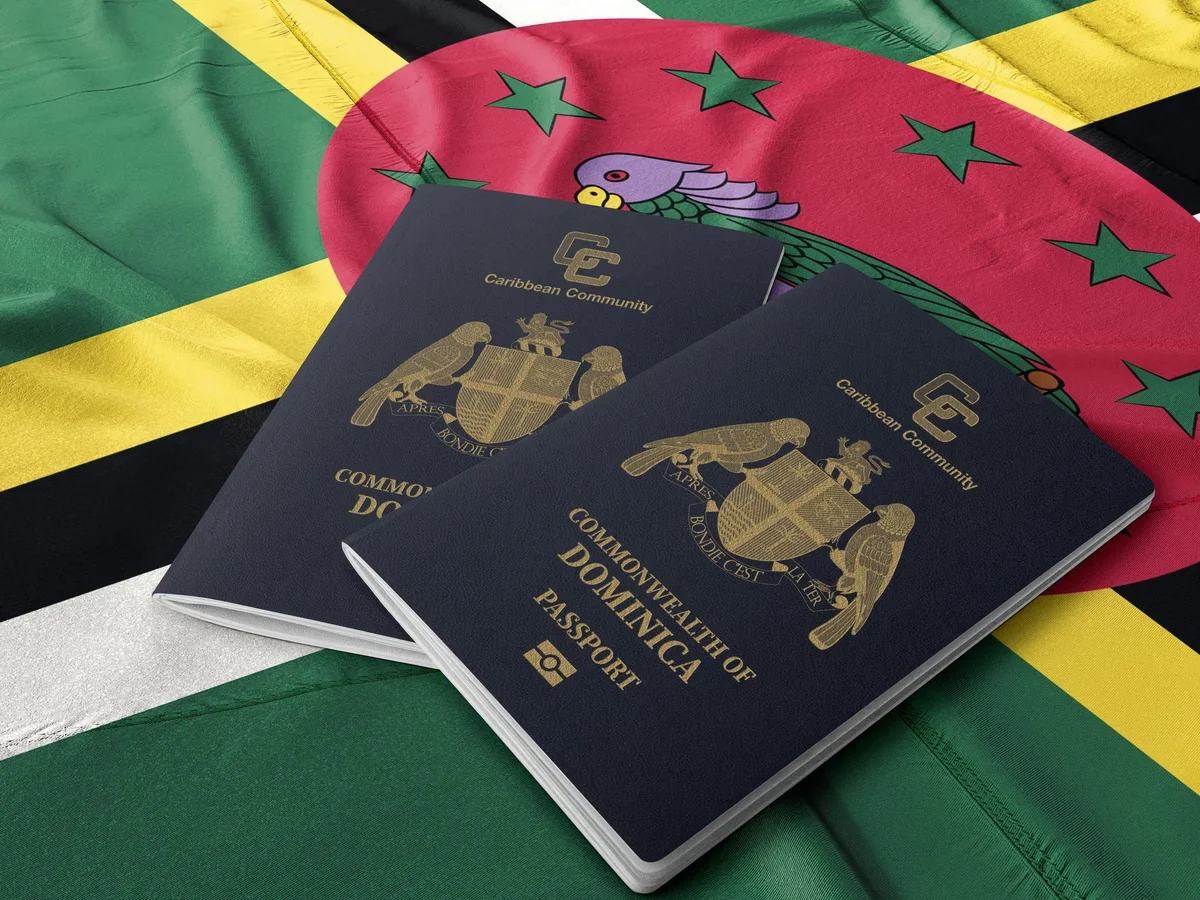
Dominica has played this game better than most. The Citizenship by Investment (CBI) program brought in over EC$600 million in in fiscal years 2022/23—an unprecedented 63% of government revenue and roughly half the national budget. It funded roads, government facilities, housing programs. It felt like salvation.
But here's the uncomfortable truth we need to face: salvation that comes from the outside can be revoked from the outside.
When the United States announced visa restrictions on CBI passport holders in late 2025, the message was clear: Dominica's economic lifeline is controlled by someone else. Washington, to be precise. The revenue that rebuilt our infrastructure after Hurricane Maria, that funds our civil service, that backstops our economy—it can be turned off with a policy memo from a foreign government.
🌀 Spin 1: Employment
A Dominican-owned tour company hires 10 local guides. That's 10 families with steady income.
🌀 Spin 2: Local Procurement
Those guides need uniforms, equipment, transportation. The tour company buys from Dominican suppliers—a seamstress in Roseau, a van rental company in Portsmouth, an equipment shop in Soufrière. Each of those suppliers now has more revenue.
🌀 Spin 3: Spending Multiplier
The 10 employed guides spend their wages at Dominican restaurants, shops, and services. The suppliers spend their increased revenue the same way. Money circulates through the local economy, touching multiple businesses before leaving the country.

The Foreign Capital Trap
Don't misunderstand—I'm not against foreign investment. Dominica needs capital, and some of it will inevitably come from abroad. But when foreign capital becomes the primary strategy, when we structure our entire economy around courting outsiders while starving insiders, we're not building sovereignty. We're renting it.
Consider what happens when CBI revenues drop by even 30% (a conservative estimate given US visa restrictions). That's EC$180 million disappearing from the national budget. Infrastructure projects stall. Government hiring freezes. Public services contract.
Now imagine if that same EC$180 million had been systematically invested in Dominican-owned businesses over the past decade- these businesses would be employing Dominicans. Buying from Dominican suppliers. Training the next generation of entrepreneurs. Paying taxes that fund our schools, hospitals and libraries. And most importantly—they wouldn't disappear when U.S. visa policy changes.
Understanding the Flywheel Effect
The Foreign Investment Flywheel Runs in Reverse
The CBI Paradox
🌀 Spin 4: Tax Revenue
The tour company pays corporate taxes. The guides pay income tax. The suppliers pay taxes on their increased revenues. The businesses they patronize pay taxes. One initial investment generates tax revenue from five different sources.
🌀 Spin 5: Skills & Inspiration
The 10 guides learn business operations, customer service, logistics. Three of them save up and start their own businesses. The flywheel accelerates.
🌀 Spin 6: Network Effects
As more Dominican businesses succeed, they create supplier networks, share expertise, mentor newcomers. The cost of starting a business decreases while the probability of success increases. The flywheel spins faster.
Here's where the economics get interesting. Most successful business owners ascribe to a concept called the flywheel effect; a virtuous cycle where each success makes the next one easier, accelerating growth without relying on a single, massive, or "miracle" moment. Translated to entrepreneurship, that means when you invest in a local entrepreneur, you're not just funding one business. You're starting a self-reinforcing cycle that accelerates economic growth.
Here's how the flywheel works:
One company employing 50 people creates the conditions for five more companies to succeed. Those five create conditions for twenty-five more. Not linearly—exponentially.
Now contrast that with foreign-controlled capital:
A foreign-owned resort opens in Dominica. It employs 100 Dominicans—good! But:
The resort buys imported linens, furniture, food (profits leave)
Management fees go to the foreign parent company (profits leave)
Profits are repatriated to foreign shareholders (profits leave)
When tax incentives expire, the company threatens to close (leverage)
Employees learn to make beds and serve drinks—not run businesses (no entrepreneur pipeline)
The multiplier effect is inverted. Instead of money circulating through the Dominican economy 5-7 times (the standard local business multiplier), it touches the economy once—through wages—then leaves. The flywheel never starts spinning.
Even worse, foreign-controlled businesses often prevent the local flywheel from starting. When a foreign resort monopolizes beachfront property, local entrepreneurs can't build competing offerings. When foreign platforms control tour bookings, local operators can't capture full value. When foreign banks won't lend to local businesses while financing foreign competitors, the field isn't just uneven—it's tilted against us.
Here's the painful irony: Dominica has used CBI revenue to build world-class infrastructure—roads, an international airport. We've created the conditions for businesses to thrive. But we've invested minimally in the actual businesses that could use that infrastructure. We've built the stage but not funded the performers.
Imagine if just 20% of annual CBI revenue—EC$120 million—went into a Dominica Entrepreneurship Fund:
EC$60 million in direct equity investment to Dominican-owned businesses (50-100 companies per year)
EC$40 million in loan guarantees that enable banks to lend to local entrepreneurs
EC$20 million in technical assistance—accounting, legal, technology, marketing support
Within five years, the flywheel effect would generate:
2,000+ new jobs from direct investments
6,000+ indirect jobs from supplier networks and spending multipliers
EC$30-40 million in new annual tax revenue
400+ second-generation entrepreneurs who learned from the first cohort
A diversified economy less vulnerable to single-program dependency
By year ten, the tax revenue generated from these businesses would exceed the initial investment. The fund would be self-sustaining. And Dominica would have an entrepreneurial ecosystem that continues growing regardless of U.S. visa policy.
The Choice Ahead
Economic sovereignty doesn't mean autarky or rejecting all foreign capital. It means ensuring that the core engine of our economy is owned and controlled by Dominicans. The U.S. visa restrictions on CBI passports are a wake-up call, not a catastrophe. They reveal what was always true: economic sovereignty built on foreign dependence is an oxymoron.
Dominica has a choice. We can panic, lobby Washington, maybe get a temporary reprieve, then return to the same vulnerable position. Or we can use this moment to fundamentally reorient our economic development strategy—from outside-in to inside-out.
Over 30 years ago, my father built his business to prove that Dominican entrepreneurs could achieve extraordinary success, and stimulate the economy. He did it alone, with minimal support, and against systemic barriers. Imagine what we could achieve if we decided—as a matter of national policy—to back our own, to achieve results at scale.
Not someday. Not after CBI revenues recover. Not after the next hurricane. Now. While we still have CBI revenue to redirect. While we still have infrastructure from past investments. While we still have entrepreneurs ready to build.
The flywheel is waiting. We just need to give it the first push.