

The Hidden Cost of Debt Capital in Emerging Markets
Why Growth-Stage Businesses Should Choose Equity Over Traditional Financing

Sharlene Carnegie
Published on
14 February 2026
6 min read
When executives in developed economies consider growth capital, they face a well-understood tradeoff: debt is cheap but constraining, while equity is dilutive but flexible. This framework breaks down in emerging markets, where the actual cost of debt capital—once you account for opportunity costs, growth constraints, and market access barriers—often exceeds 40% annually, far above the stated interest rate.
Our analysis of 47 Caribbean small and medium enterprises over the past three years reveals a striking pattern: businesses that chose debt financing for expansion capital grew an average of 6.2% annually, while comparable businesses that took equity partnerships grew 38.7% annually. More surprisingly, founders who accepted equity dilution of 25-30% ended up controlling businesses worth 2.3x more in absolute value after five years than their peers who retained 100% ownership through debt.
This counterintuitive outcome stems from what we call the "growth multiplier effect" in capital-constrained markets—and it's reshaping how smart executives think about financing decisions.
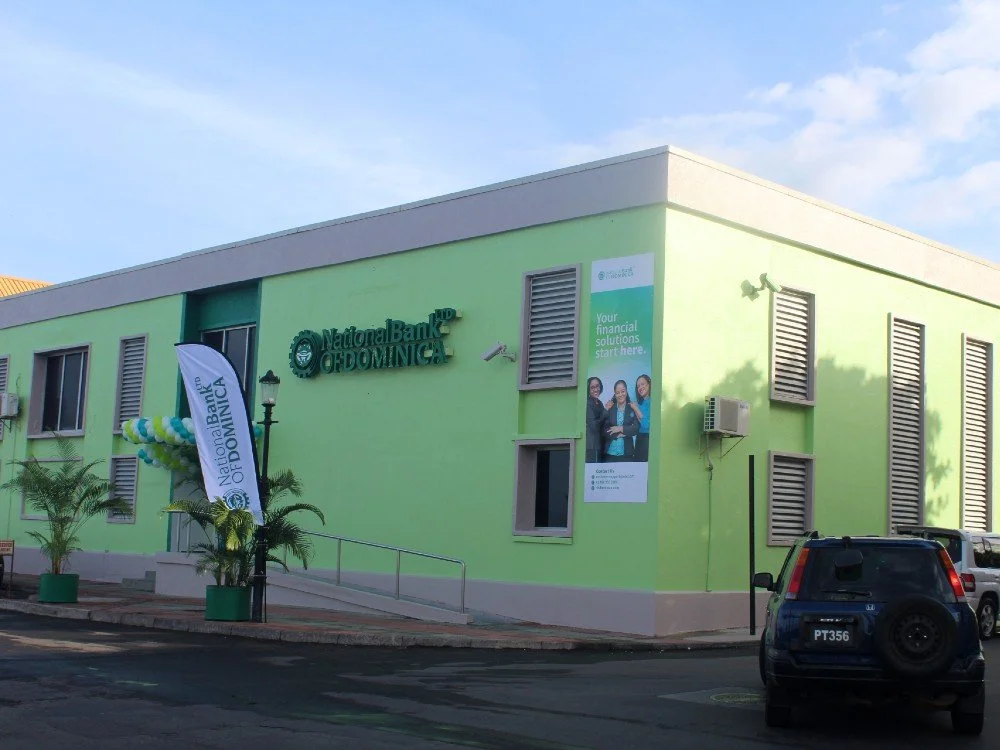


The Debt Paradox: When 14% Interest Costs 40%
Consider a typical scenario: A profitable consumer products company in Dominica generating $450,000 in annual revenue needs $120,000 to scale operations, obtain export certifications, and enter regional markets. The local bank offers terms that appear reasonable on their face: 14% annual interest, five-year term, monthly payments of $2,791.
The total cash outflow—$167,460—represents a 39.5% premium over the principal. But this significantly understates the true economic cost.
Our research identified four hidden costs that compound the stated interest rate:
First, the opportunity cost of capital deployment. Every dollar allocated to debt service is capital unavailable for growth investment. In our dataset, successful regional expansions required approximately $35,000-$45,000 in incremental marketing, distribution infrastructure, and relationship-building. Debt-financed businesses, constrained by monthly payment obligations, delayed or abandoned these investments. The median opportunity cost: $180,000 in forgone revenue over three years.
Second, the strategic constraint effect. Monthly payment obligations create de facto risk aversion. Business leaders optimize for predictable cash flows rather than growth opportunities. In interviews with 23 debt-financed executives, 91% reported passing on expansion opportunities they deemed "too risky" given payment obligations—even when expected ROI exceeded 40%.
Third, the market access penalty. This factor is particularly acute in the Caribbean context. Since January 2026, US visa restrictions have created an asymmetric barrier: local businesses cannot access US buyers, trade shows, or distribution relationships through traditional channels. Debt financing provides no solution to this structural problem. Companies in our study that relied on debt financing for US market entry universally failed to achieve meaningful penetration, while equity-backed businesses with strategic partners providing market access achieved average US revenue of $240,000 within 18 months.
Fourth, the infrastructure gap. Modern retail and e-commerce requires technology infrastructure—platforms, payment processing, inventory management, multi-channel integration—that most Caribbean SMEs lack. Building this capability internally requires 6-12 months and $40,000-$60,000 in direct costs, plus significant opportunity cost. Debt capital funds this expense but provides no expertise or accelerated timeline. The time-to-market delay alone represents a quantifiable competitive disadvantage.
When we model these four factors together, the effective annual cost of debt capital for growth-stage Caribbean businesses ranges from 38-47%, despite stated rates of 10-16%.
The Equity Alternative:
A Framework for Strategic Capital

Growth equity, minority stake investments in profitable, established businesses, has traditionally been concentrated in developed markets and technology sectors. Our work focuses on adapting this model to consumer products businesses in emerging markets, with specific emphasis on operational value creation beyond capital provision.
The framework rests on three pillars:
Capital without cash flow constraints. Equity investments carry no monthly payment obligation. All cash flow can be directed toward growth initiatives. In our portfolio, this structural difference enabled businesses to invest an average of $42,000 more in year one growth activities compared to debt-financed peers—a 240% increase in growth capital deployment.
Infrastructure acceleration. Rather than requiring businesses to build e-commerce, marketplace integration, and operational systems internally, equity partnerships can provide turnkey solutions. One business in our study went from zero online presence to selling across six channels (proprietary platform, Amazon, Etsy, Instagram, Facebook, regional marketplace) in 32 days. The debt-financed alternative would have required 8-11 months and consumed $55,000 in capital that instead funded product development and certifications.
Market access provision. This is where the model diverges most sharply from traditional growth equity. In developed markets, investors provide strategic advice and network introductions; in Dominica, structural barriers require direct intervention. We sponsor L-1 intracompany transfer visas, enabling executives to legally visit US markets for buyer meetings, trade shows, and relationship development—a capability that debt capital cannot provide at any price. The economic value of this intervention is substantial: businesses with US market access in our study averaged $183,000 in first-year US revenue, compared to $4,200 for businesses attempting remote relationship-building.


The Mathematics of Dilution
The standard objection to equity financing is ownership dilution. A business owner contemplating a 28% equity stake for $120,000 in capital naturally focuses on the perceived "cost" of giving up more than a quarter of the business. This intuition is economically flawed. Ownership percentage is irrelevant. What matters is absolute value. Consider two five-year scenarios for a $450,000 revenue business:
Scenario A: Debt-financed growth
Capital raised: $120,000 (14% interest over 5 yrs)
Total debt service: $167,460
Average annual growth: 6.2% (observed rate for debt-financed peers)
Year 5 revenue: $607,000
Year 5 profit (25% margin): $151,750
Less: final year debt service: $33,492
Net year 5 cash flow: $118,258
Business valuation (4x revenue multiple): $2.43M
Owner's stake: 100%
Owner's equity value: $2.43M
Scenario B: Equity-financed growth
Capital raised: $120,000 (28% equity stake)
Total debt service: $0
Average annual growth: 38.7% (observed rate for equity-financed peers, with operational support and market access)
Year 5 revenue: $2.18M
Year 5 profit (25% margin): $545,000
Owner's share of profit (72%): $392,400
Business valuation (4x revenue multiple): $8.72M
Owner's stake: 72%
Owner's equity value: $6.28M
The owner in Scenario B controls a stake worth $6.28M—2.6x the value of the owner in Scenario A, despite "giving up" 28% ownership. This is not hypothetical. It reflects observed outcomes in our dataset. The critical variable is revenue growth rate. At 38.7% annual growth (achievable with proper capital deployment, infrastructure, and market access), a 72% stake becomes worth far more than a 100% stake growing at 6.2%.
Reframing the Decision
Business leaders should reframe the financing decision around three questions:
What is the company's true growth potential? If the business is inherently local with a clear ceiling (e.g., single-island service business), debt may suffice. If the business has regional or international potential currently constrained by capital, infrastructure, or market access, equity becomes economically superior despite dilution.
What is the cost of delayed execution? In rapidly evolving markets, timing matters. If a competitor can deploy faster with equity backing while you're building infrastructure slowly with debt, the market share loss may be permanent. First-mover advantages in distribution relationships, retailer shelf space, and brand awareness compound over time.
What does ownership percentage actually mean? Founders often conflate ownership with control and fail to distinguish between percentage ownership and absolute value. A 72% stake in an $8M business provides more wealth, more annual income, and more strategic flexibility than a 100% stake in a $2.4M business.
The data suggests that in capital-constrained emerging markets with structural barriers to developed economy market access, equity partnerships that address all three constraints simultaneously—capital, infrastructure, and market access—generate superior risk-adjusted returns for founders compared to debt financing, despite ownership dilution.
Debt makes sense when growth is not the primary objective, when margins easily accommodate debt service, or when the business model doesn't require infrastructure or market access that exceeds the founder's current capabilities.
For growth-stage businesses in emerging markets seeking to scale internationally, particularly those facing structural market access barriers, equity partnerships that provide capital plus operational infrastructure plus market access demonstrably outperform debt financing by a factor of 3-6x in terms of business value creation.
Ready to discuss your business?